
How Long to Fill a Pool Calculator
Last updated 15 October 2026
Enter remaining water and a supply-flow measurement to get your pool’s fill time.
Your result will appear here
Enter your measurements, then choose Calculate.
Use the flowing time to plan the fill at your measured supply rate.
Still unknown or unconfirmed
Formula, sources and blank printable worksheet
FILL-1: bucket GPM = bucket US gal × 60 / seconds. Minutes = remaining US gal / GPM.
Calculation version 1.0 uses historical engineering references for arithmetic, not current residential law.
- NIST Handbook 44, Appendix C: US gallon and length units https://www.nist.gov/system/files/documents/2019/11/19/00-20-hb44-final11152019pdf.pdf
| Quantity / unit | Reading | Source and date |
|---|---|---|
| Water volume | ________________ | ________________ |
| Volume unit | ________________ | ________________ |
| Existing water (enter 0 only for an empty pool) | ________________ | ________________ |
| Supply measurement | ________________ | ________________ |
| Bucket volume in selected volume unit | ________________ | ________________ |
| Bucket fill seconds | ________________ | ________________ |
| Direct combined flow, US GPM | ________________ | ________________ |
Mark missing measurements Unknown. Keep exact model, source revision and assumptions with this worksheet. Report a calculation or source correction with reproducible inputs.
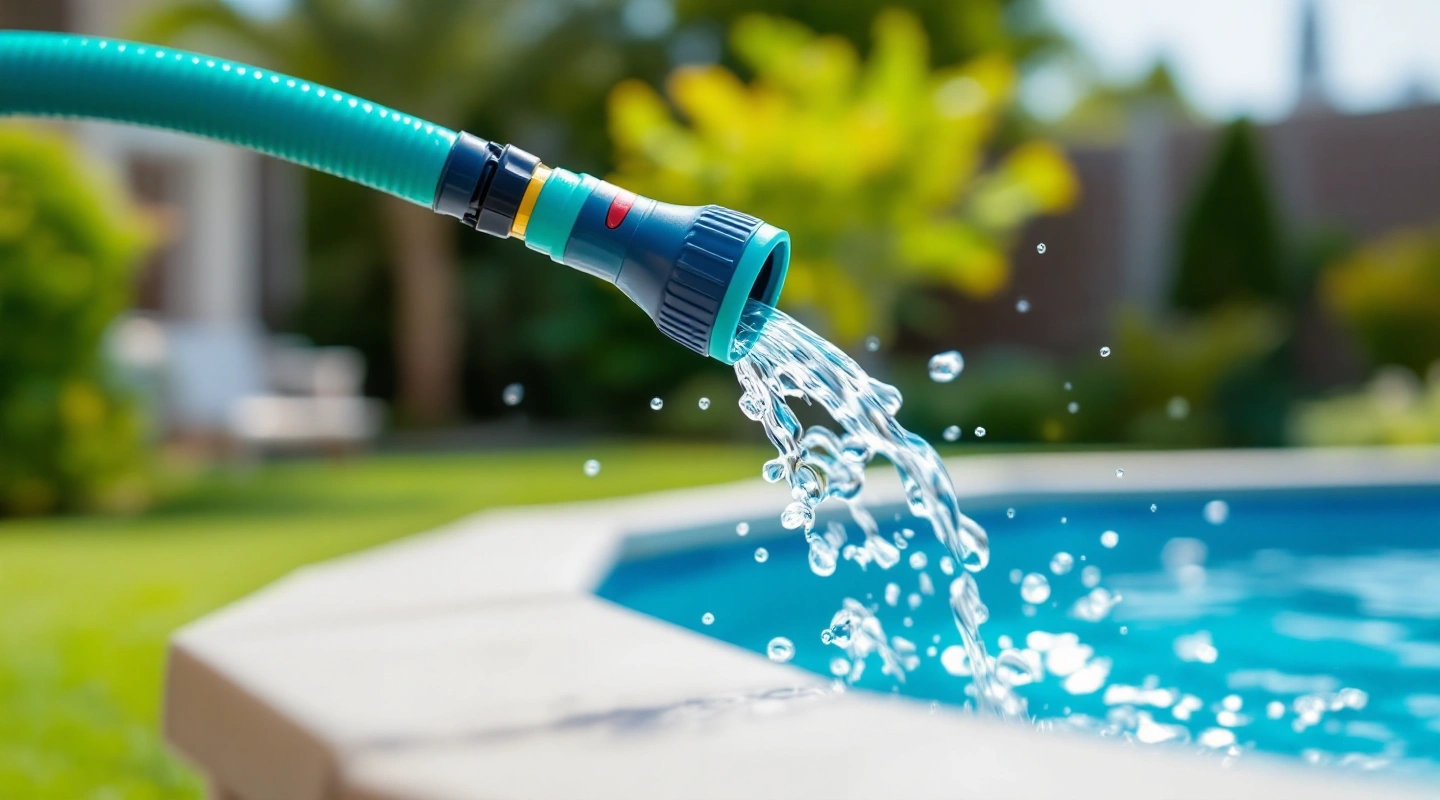
This how long to fill a pool calculator divides the water still needed by measured supply flow. It estimates elapsed time at that flow. It does not assume every garden hose delivers the same amount.
Measure flow with a known-volume bucket and a timer. Divide the bucket's US gallons by fill seconds, then multiply by 60 to get gallons per minute. Divide the pool's remaining gallons by that rate. The result assumes steady flow. Several hoses need a combined test while they run together, since they may share the same supply.
On this page7
How long to fill a pool calculator: water remaining
Use the volume calculator for the full water quantity. Does the pool already hold water? Subtract that known volume from the total. Or enter the amount still needed as the total and enter zero for existing water. Each inch of depth need not hold the same volume in a sloping pool.
Enter US gallons, litres or cubic metres. Imperial gallons are a different unit and are not used here. Keep the fill-level assumption beside the result. A target at the normal operating waterline differs from filling to the rim.
Fill a pool calculator bucket test
Place a bucket of known capacity where you can safely collect the hose flow. Use the same tap setting, hose and nozzle arrangement as the fill. Start the timer as collection starts. Stop when the known volume is reached. A guessed bucket mark produces a guessed flow.
The formula is bucket gallons × 60 ÷ seconds. A 5-US-gallon bucket filled in 30 seconds gives 10 GPM. This is a worked arithmetic example, not a typical hose rating. At 10 GPM, adding 15,000 gallons takes 1,500 minutes, or 25 hours.
| Input or result | Worked example |
|---|---|
| Bucket volume | 5 US gallons |
| Fill time | 30 seconds |
| Calculated supply flow | 10 GPM |
| Water still needed | 15,000 US gallons |
| Calculated fill duration | 25 hours |
Several hoses and changing pressure
Two separate bucket tests cannot prove their combined flow. Open both hoses together and measure their simultaneous delivery. A shared pipe can limit total supply. Recheck if household demand changes or the hose setup moves.
The result is a planning estimate. It does not detect overflow, a supply interruption or a leaking pool. Supervise filling and follow the pool maker's fill instructions. Do not drain a pool solely to obtain a cleaner volume measurement.
Optional water-only expense
If your bill lists a volumetric rate, use its stated units. For a rate per 1,000 US gallons, expense is gallons added ÷ 1,000 × rate. For a rate per cubic metre, multiply cubic metres by that rate. A blank tariff stays unknown.
Fixed charges, sewer rules, tier changes and fill permits can alter the bill. They are separate unknowns unless entered from the utility's current terms. The tool does not infer them from a postal code. Filling time remains useful without a price entry.
Check the estimate before filling
The calculation is volume divided by volume per minute. Unit conversions follow NIST Handbook 44, Appendix C. Save the volume before you use the pool pump size calculator to find a circulation target. The surface area tool measures the exposed water outline.
FAQ
Will a larger hose always fill faster?
The supply, tap, hose length and nozzle can all restrict flow. A larger hose alone does not establish a rate. Repeat the bucket test with the actual filling setup. Use the measured combined rate if more than one hose will run at the same time.
Does the answer include filling breaks?
The calculated time assumes continuous delivery at the entered flow. Add planned pauses separately. If you fill only during certain hours, elapsed calendar time will be longer than flowing time. Save the measured rate and the expected operating window together.
Verdict on fill time
The how long to fill a pool calculator is most useful after a fresh bucket test. Record water remaining, hose arrangement and test time. Print the worksheet or save the local JSON record before changing the setup. Calculation version 1.0.